

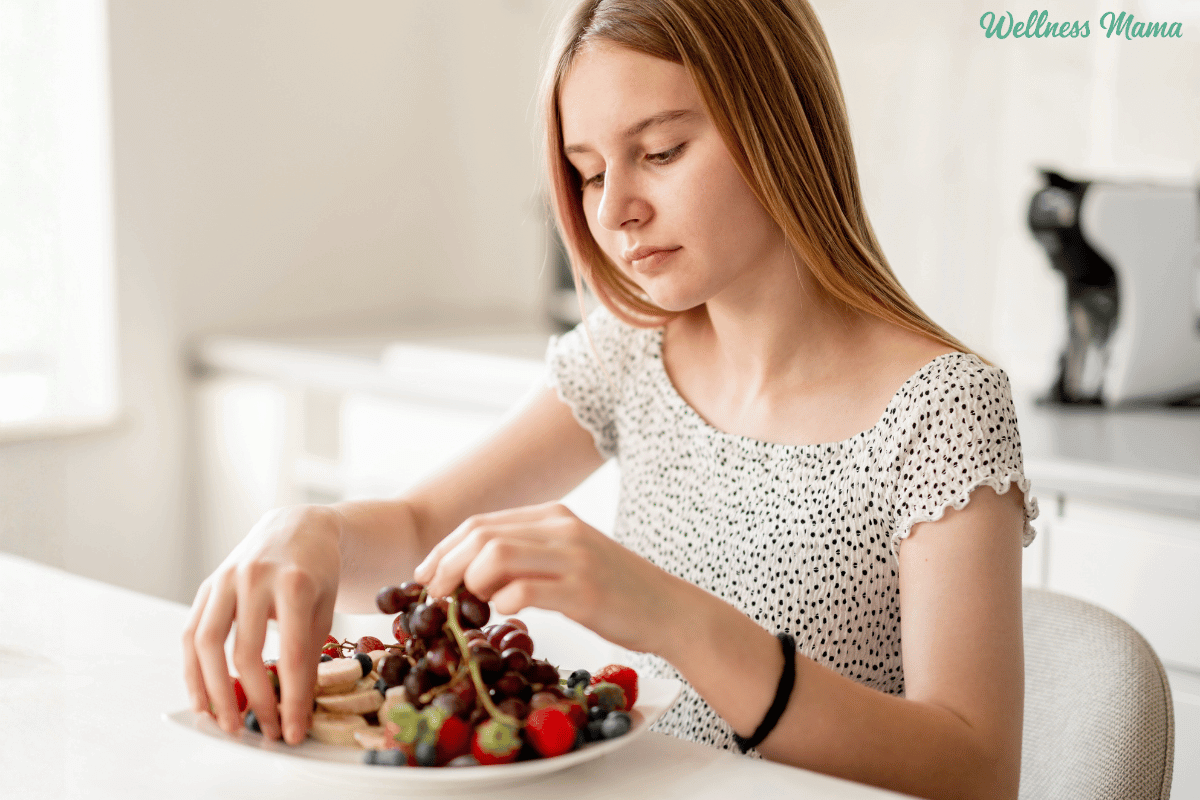
Mother and father ask me about meals greater than virtually anything. In any case, I’m the pure well being girl, so in fact my youngsters are all the time consuming kale smoothies (probably not). When well being dogmas and actual life collide, on the finish of the day what do I feed my youngsters? And extra importantly, how do I assist them make wholesome consuming selections?
Meals can really feel like high-stakes parenting, and it’s simple to fret that one incorrect transfer will set youngsters up for unhealthy habits. You may be shocked to study that I really don’t micromanage what my youngsters eat.
Over years of parenting, analysis, and private trial and error, I’ve realized that tightly managing meals usually backfires. As a substitute, I give attention to offering nourishing choices, modeling good habits, and trusting my youngsters to take heed to their our bodies. This method isn’t about throwing out all construction, however constructing autonomy and a more healthy relationship with meals.
Why Meals Management Typically Backfires
One of many largest shifts in my considering got here from understanding how restriction impacts want. There’s a rising physique of analysis exhibiting that once we tightly management meals, particularly meals labeled as “junk” or “unhealthy,” it may possibly really make us need them extra.
A examine in Urge for food discovered that kids who had restricted entry to sure meals have been extra prone to overeat these meals after they turned accessible. In distinction, kids who weren’t restricted tended to eat much less of these meals. Plus, they have been extra in tune with their starvation cues.
Should you’ve ever dieted, you will have observed the identical factor. The extra forbidden a meals turns into, the extra energy it holds.
Psychologically, this is sensible. Restriction creates rigidity. It frames meals as one thing to be resisted relatively than understood. Over time, that rigidity can override inner indicators like starvation and fullness, changing them with exterior guidelines and emotional responses.
There’s additionally proof that pressuring youngsters to eat sure meals, like insisting they end greens, can have long-term penalties. Analysis from the Journal of Diet Training discovered that kids who have been pressured to eat greens have been really much less prone to eat them later in life. What begins as a well-intentioned push for well being can quietly backfire.
Youngsters Are Born With Self-Regulation Expertise
Some of the fascinating items of analysis on this space focuses on self-regulation, particularly in younger kids. Research printed within the New England Journal of Drugs noticed that toddlers naturally modify their calorie consumption over time. In the event that they eat extra at one meal, they usually eat much less at later meals. In the event that they undereat someday, they compensate the subsequent.
In different phrases, kids are born realizing the right way to regulate consumption. That’s, if we don’t override that system.
When meals selections are closely managed or restricted, kids can lose contact with these inner cues. As a substitute of asking, Am I hungry? Am I full? they study to ask, Is that this allowed? Will I get in bother? Over time, exterior management replaces inner consciousness.
This issues not only for bodily well being, however for his or her long-term relationship with meals. The power to note starvation, fullness, cravings, and satisfaction is a ability we are able to carry into maturity. As soon as it’s misplaced, it takes intentional work to rebuild.
The Downside With “Good” and “Unhealthy” Meals Labels
One other delicate however highly effective issue is how we speak about meals. When meals are labeled as “good” or “unhealthy,” morality will get connected to consuming. Consuming one thing “unhealthy” can result in guilt or disgrace, whereas consuming one thing “good” can really feel like an ethical win.
There’s proof that this ethical framing might contribute to disordered consuming patterns later in life. A evaluation within the Worldwide Journal of Consuming Problems discovered hyperlinks between controlling consuming and a better danger of disordered consuming in adults.
I’ve seen this play out personally. Rising up, sure meals have been framed as off-limits or unhealthy, largely on account of funds constraints. Once I gained independence as a teen, these meals felt irresistible. Not as a result of they made me really feel good, however as a result of they’d been forbidden. It took years to separate precise enjoyment and bodily response from psychological attraction.
Serving to Youngsters Perceive Meals Selections
On the flip aspect, after I first began making an attempt to eat wholesome I had some harsh issues to say about sure meals. And whereas I nonetheless don’t assume extremely processed meals must be in anybody’s kitchen, I’m extra targeted on the constructive now. As a substitute, I’m specializing in serving to my youngsters (and different adults) perceive what meals do within the physique.
With my youngsters, I attempt to keep away from rating meals. As a substitute of labeling one thing as “unhealthy,” we speak about what it does within the physique. Protein helps construct and restore tissue. Minerals assist electrical signaling. Carbohydrates present power and hormone assist. This sort of data offers youngsters context with out attaching judgment.
Autonomy as a Core Parenting Precept
On the coronary heart of this method is a broader perception. My kids are infinite autonomous human beings, every with their very own paths. My position isn’t to manage them, however to information them towards changing into succesful, wholesome adults who belief themselves.
Meals is likely one of the earliest and most tangible methods kids expertise autonomy. What they put into their our bodies issues, not simply nutritionally, however psychologically. Respecting their company on this space reinforces the deeper message that they’re allowed (and inspired) to take heed to their physique.
This doesn’t imply an absence of construction. It means selecting construction that helps autonomy relatively than undermines it.
What This Seems Like in Observe
Having rules and requirements is one factor, however really placing them into apply is one other. So what does this really appear like in our residence?
Meals Isn’t a Reward or a Punishment
I don’t use meals as leverage. There’s no “eat this to earn dessert” or “skip dinner and eat it for breakfast.” These techniques can disconnect consuming from starvation and switch meals right into a forex.
When youngsters select to eat nutrient-dense meals on their very own, that alternative carries extra weight than when it’s coerced. Over time, voluntary selections usually tend to stick.
I Present, They Determine
I don’t inventory the pantry with ultra-processed meals, however I additionally don’t micromanage what they eat or how a lot. The home is stuffed with complete meals, proteins, fruits, greens, and leftovers they will get on their very own as wanted.
I prepare dinner one household meal and that’s what’s provided as the choice. My youngsters are free to eat it… or not. In the event that they’re nonetheless hungry later, they will make eggs, fruit, or leftovers. I’m not a short-order prepare dinner, however I’m additionally not a meals enforcer.
Modeling Over Guidelines
I shortly realized as a mother that our youngsters study way more from what we do than what we are saying. After they see me eat all kinds of meals, their curiosity naturally grows. Meals they as soon as prevented usually turn into acquainted over time, with out strain.
When my youngsters have been infants and making an attempt new meals that they thought seemed suspicious, I ate it in entrance of them. This helped them determine it was okay for them too.
Instructing With out Controlling
When youngsters have an interest, I clarify how meals works within the physique. Not lectures, simply conversations. We speak about why minerals matter, how protein helps muscle tissue, and what electrolytes do. After they’re open to studying they’ll soak it in like a sponge.
Information empowers alternative. When youngsters perceive why sure meals really feel higher, they’re extra probably to decide on them.
Consuming Outdoors the House
When my youngsters are at eating places or associates’ homes, I don’t touch upon their meals selections. I don’t limit and even ask. Occasional publicity to meals I wouldn’t serve at residence isn’t dangerous, particularly within the context of an in any other case nutrient-dense eating regimen.
Resilience issues greater than perfection. Usually, the dose makes the poison. I really feel like this helps take the strain off after they would possibly get slightly little bit of one thing (like vegetable oil) at a good friend’s home.
Why This Method Works Lengthy-Time period
Analysis helps a steadiness often known as authoritative parenting, a mixture of construction and autonomy. A 2020 evaluation discovered this method led to more healthy consuming patterns than inflexible, authoritarian management.
By stepping again because the exterior regulator, youngsters strengthen their inner regulation. They study accountability, belief, and physique consciousness. And so they do it with out meals battles.
Addressing Frequent Considerations
I’m certain a lot of you studying this are going to have some questions and issues about my technique. And truthfully, I’m not even making an attempt to inform you that you need to method consuming the identical manner I do. That is simply what I’ve discovered works for my youngsters and why we do it. However listed here are a number of the high FAQs I hear from mothers after I share my method.
“Received’t they only eat sugar all day?”
In my expertise, the novelty wears off, particularly when meals aren’t forbidden. Youngsters might check boundaries initially, however self-regulation can reemerge surprisingly shortly. Actually, some research present that children who had fewer meals restrictions ate fewer cookies when given the possibility in comparison with youngsters with tigher meals guidelines.
“What about vitamins?”
That is the place parental accountability nonetheless issues. Offering nutrient-dense choices, selection, and training creates a powerful basis. From there, youngsters usually make balanced selections. If all they need to eat at residence are more healthy choices, then that’s what they’ll have to select from.
“Doesn’t this create chaos?”
Fairly the other. With out energy struggles, meals are calmer. Construction stays, however rigidity fades.
Remaining Ideas on Youngsters and Meals Selections
Strict management usually backfires, particularly in relation to meals. As a substitute, belief, modeling, and connection are likely to win over time.
My aim isn’t to boost youngsters who clear their plates or keep away from each “unhealthy” meals. Truthfully my views on what’s wholesome and what isn’t (like grains) have modified over time. As a substitute, my aim is to boost adults who belief their our bodies, perceive nourishment, and really feel assured making selections lengthy after I’m not there to information them.
When kids are revered, knowledgeable, and given actual autonomy, they usually rise to the event. I’ve seen this play out with my very own youngsters and I’m regularly shocked by how succesful and inventive they’re when given the chance.
How do you deal with meals in your house? Do you could have any meals guidelines or methods to encourage wholesome consuming? Tell us within the feedback!
