


The fifth time’s a attraction for American mountaineer and path runner Tyler Andrews of the U.S., who has set a brand new quickest identified time (FKT) for ascending Mount Everest with supplemental oxygen in a reported time of 9 hours and 55 minutes, on Might 27 and 28, 2026.
This effort bests the earlier quickest velocity ascent set by Lakpa Gelu Sherpa in 2003 of 10 hours and 56 minutes by a large 61 minutes.
Andrews has been coaching at and round Mount Everest for a number of years, made one prior unsuccessful velocity try a couple of days in the past and three makes an attempt within the spring of 2025. In these prior makes an attempt, myriad elements have stopped him, together with climate, inadequate bottled oxygen, and kit issues. Andrews made this profitable try close to the shut of the mountain’s spring climbing season.

In Might of 2026, Tyler Andrews set a brand new quickest identified time for ascending Mount Everest utilizing supplemental oxygen. On this photograph, Andrews trains within the Himalayas in 2025. All images courtesy of Tyler Andrews.
Everest, which stands at 8,848 meters (29,031 ft) tall, has a comparatively brief climbing window ruled by when the “Ice Medical doctors” — native climbing Sherpas who set the route throughout the treacherous Khumbu Icefall — first arrange the route on the entrance finish of the season, and when the monsoon season arrives with an excessive amount of snow for climbing.
The route extends from Everest Base Camp, positioned at 5,364 meters (17,598 ft) altitude, via the Khumbu Icefall, previous Camps 1 via 4, and onto the South Col earlier than climbing up onto the huge ridgeline extending to the summit. All instructed, the route is one thing within the neighborhood of 13.5 kilometers (8.4 miles) lengthy from base camp to the summit, with round 3,500 meters (11,500 ft) of climbing via mountaineering terrain of all types.
Remarkably, following his first try of this climbing season just a few days in the past, he was again at it, starting on Wednesday, Might 27, at 7:11 p.m. native time, simply as darkness set in.
His map tracker labored intermittently, so it was useful to see stories within the updates part of his monitoring web site, uploaded manually by his crew on occasion. He reportedly made it via the Khumbu Icefall and into Camp 1 in 2:08 elapsed, and to Camp 2 (about 6,750 meters/22,145 ft) at 3:16 elapsed. Andrews handed Camp 3 (7,300 meters/24,000 ft) at 4:47 elapsed, and reportedly arrived to Camp 4 (7,920 meters/26,000 ft) at 6:46 elapsed. The ultimate report earlier than the highest was from the decrease south summit, which got here in at 9:25 elapsed. It appeared that, barring main catastrophe and with loads of padding on the document, success was solely a brief climb away.
At 5:06 a.m. native time on Thursday, Might 28, after an evening of climbing, his crew reported that he had reached the summit. This resets the document at 9 hours and 55 minutes. His crew has indicated on social media that they’ll verify this time as soon as Andrews is off the mountain.
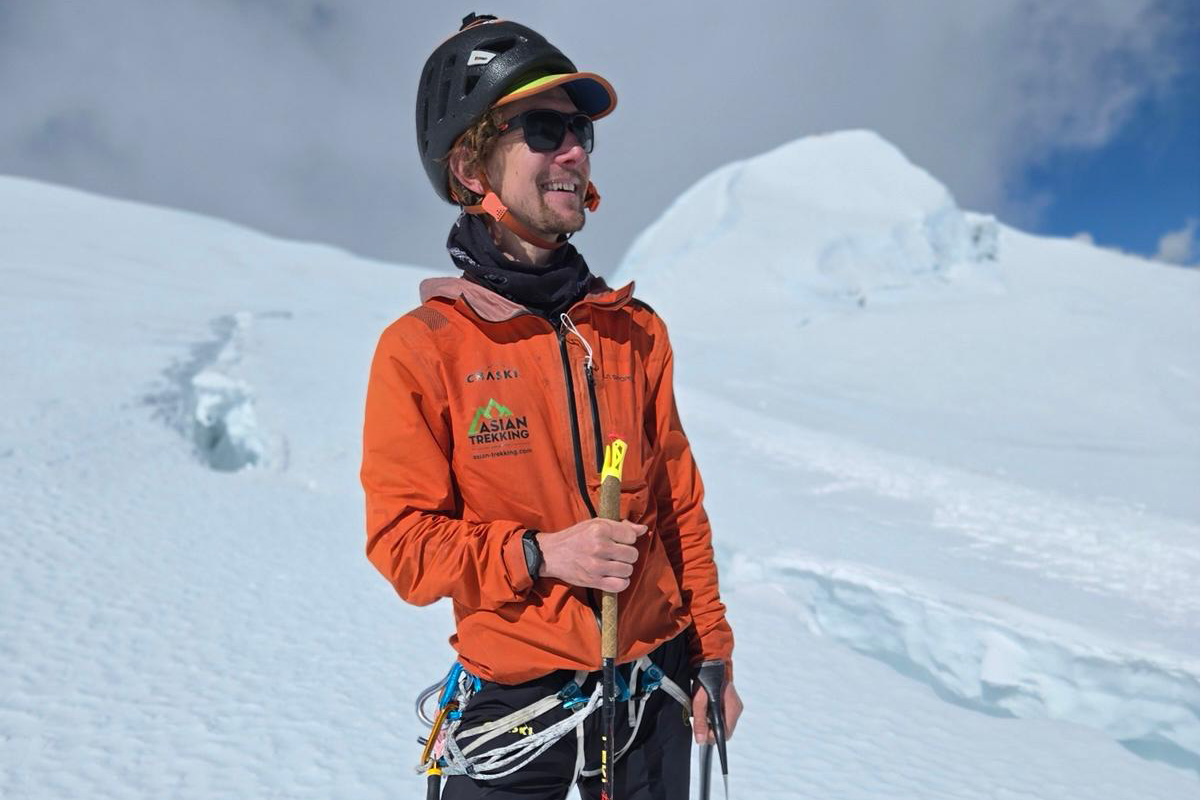
Tyler Andrews pictured coaching on the mountain in 2025.
Andrews has seen success in quite a lot of disciplines, together with operating and high-altitude mountaineering. In 2021, he gained the Javelina 100k, and that very same yr, he positioned fifteenth on the Leadville 100 Mile. Earlier, in 2016, he positioned second on the IAU 50k World Championships, and he was topped the USATF 50-mile nationwide champion when he gained the Tussey Mountainback 50 Mile in 2019. In recent times, he’s targeted extra on massive mountain efforts, and he at present holds the FKT for the round-trip climbs of 8,163-meter (26,781 ft) Manaslu and 6,812-meter (22,349 ft) Ama Dablam in Nepal. In 2023, he set FKTs on Mount Kilimanjaro (5,895 meters/19,341 ft) in Tanzania and Aconcagua (6,961 meters/22,837 ft) in Argentina.
At this level, it’s unclear at what level on the mountain Andrews started utilizing bottled oxygen on this summit bid. Our sister web site, ExplorersWeb, reported earlier immediately that Andrews had deliberate to start out utilizing oxygen at Camp 2. For extra data, go to ExplorersWeb, which has been overlaying the Everest climbing season and these velocity makes an attempt in rather more element.
It’s additionally unclear if he’ll plan to return downhill expediently. We imagine there’s at present no round-trip oxygen-assisted velocity document.
This story is evolving, and we’ll replace it as wanted.
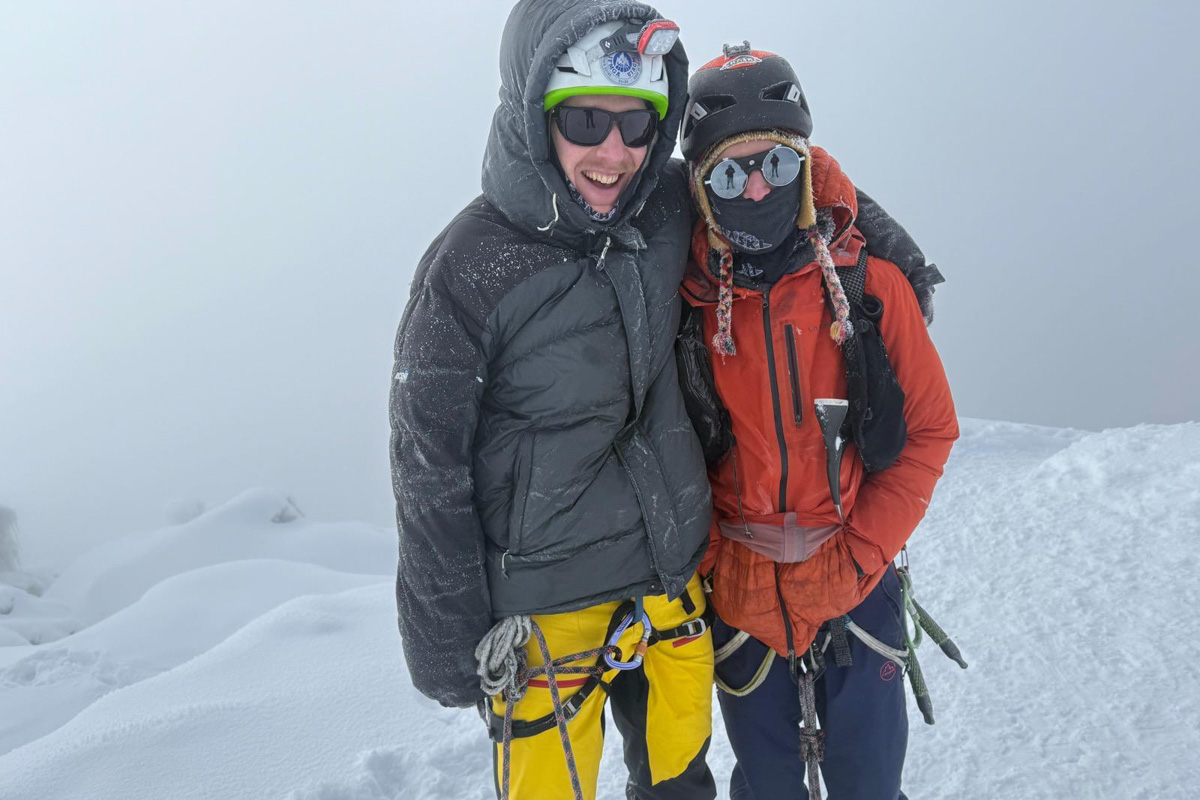
Tyler Andrews throughout certainly one of his many coaching and acclimatization climbs on Mount Everest.
