

Possibly you’ve seen microgreens at your native farmer’s market or farm to desk restaurant. These little inexperienced vegetation are just like sprouts, and simply as full of vitamins. Rising microgreens at house is very easy and affords so many well being advantages!
What are Microgreens?
Microgreens are miniature vegetation of greens, herbs, or different greens. Like sprouts, they’re a concentrated nutrient supply and full of useful enzymes because of their fast progress. Whereas sprouts are grown with out soil and are sprouted seeds, microgreens depend on soil or one other rising medium.
Microgreens are widespread at connoisseur eating places due to their distinct taste and presentation. You don’t must go to a flowery restaurant although to eat microgreens! Our native well being meals shops promote them, however I’ll typically develop my very own microgreens as a result of it’s less expensive.
They’re easy sufficient to develop which you could simply have a contemporary plant supply in your kitchen 12 months spherical. One draw back to sprouts is their potential to develop micro organism (which is uncommon) as a result of they’re grown within the air and never soil. With microgreens you’re consuming the stem and leaves, not the seed and root.
Are Microgreens Good For You?
In a phrase, sure. Analysis reveals that microgreens have 4-40% extra micronutrients in comparison with full grown herbs and veggies. Microgreen advantages embody getting fiber, minerals, and nutritional vitamins our cells have to thrive. And the advantages of microgreens don’t cease there. You’ll additionally discover antioxidants to battle free radical harm.
Forms of Microgreens to Develop
Probably the most generally used vegetation for rising microgreens are:
- Lettuce
- Kale
- Spinach
- Radish
- Beet
- Watercress
- Herbs
- Greens
- Cabbage
- Mustard
- Chia
- Sunflower
- Buckwheat
- Clover
- Kholorabi
- Peas
Any edible plant that’s totally edible (root to leaves) can technically be used, however the ones above are the commonest and style the very best. In case you’re in search of the very best microgreens for newbies, broccoli and radish stand out.
Can I Develop Microgreens in Potting Soil?
Sure, potting soil works effectively with microgreens, however it may well get slightly messy. I choose natural potting soil to keep away from undesirable pesticide residue. Potting soil often has some fertilizer blended in for sooner develop time. Simply make sure while you’re trimming off the microgreens to not get the dust together with it.
An alternative choice is coconut coir or coco coir. Comprised of fibrous coconut hulls, it holds as much as ten instances its weight in water and is of course immune to fungus. It doesn’t have quite a lot of vitamin in it so you’ll be able to combine in slightly fertilizer or use a 50/50 mix of soil and coco coir.
If you wish to develop microgreens at dwelling with out soil (hydroponically), then a hemp mat is a good possibility. You may develop microgreens in water with a hemp mat and sow the microgreen seeds straight onto that. For this tutorial although I’m specializing in rising seeds in soil (which might impart extra vitamins).
Tips on how to Develop Microgreens in a Mason Jar
You may develop seed sprouts in a jar, however you too can develop microgreens that approach. Merely observe the identical steps as under, however as an alternative of utilizing a shallow container, use a large mouth jar. The draw back to utilizing a jar is that relying on the jar’s dimension you may not get many greens and they are often more durable to reap.
Tips on how to Develop Microgreens in a Tray
That is my most popular methodology. You simply want a shallow, sturdy tray. Some folks use plastic microgreen trays, however you too can use glass or compostable ones.
Right here’s develop your personal microgreens!
What You Have to Develop Microgreens at House
Tips on how to Develop Microgreens:
- Discover a south-facing window with loads of daylight or set up a growlight. I’ve discovered {that a} growlight mounted below kitchen cupboards works completely for rising greens on the counter when you’ve got the area to do it. In hotter months, these can be simply grown exterior.
- Place an inch of natural potting combine within the backside of a shallow tray or planter. You may as well use a 50/50 mixture of soil and coco coir. Easy the soil out evenly.
- Thickly scatter seeds evenly over the soil floor.
- Cowl the seeds with a skinny layer of soil and spray the floor with clear, filtered water. I exploit a glass spray bottle.
- Place on the warming mat, if utilizing, and below the develop gentle or close to a sunny window.
- Mist the seeds a couple of instances a day to maintain the soil evenly moist whereas ready for the seeds to germinate. You may as well put a small fan on them to offer them a delicate breeze, deter mildew, and enhance progress.
- Greens are often prepared to reap in 2-4 weeks, relying on the kind of seed used.
- To develop one other crop, both take away the roots and replant or dump your complete tray within the compost and fill with extra soil combine to replant. In case you dump within the compost, some straggler seeds often volunteer and make a crop of their very own a couple of weeks later.
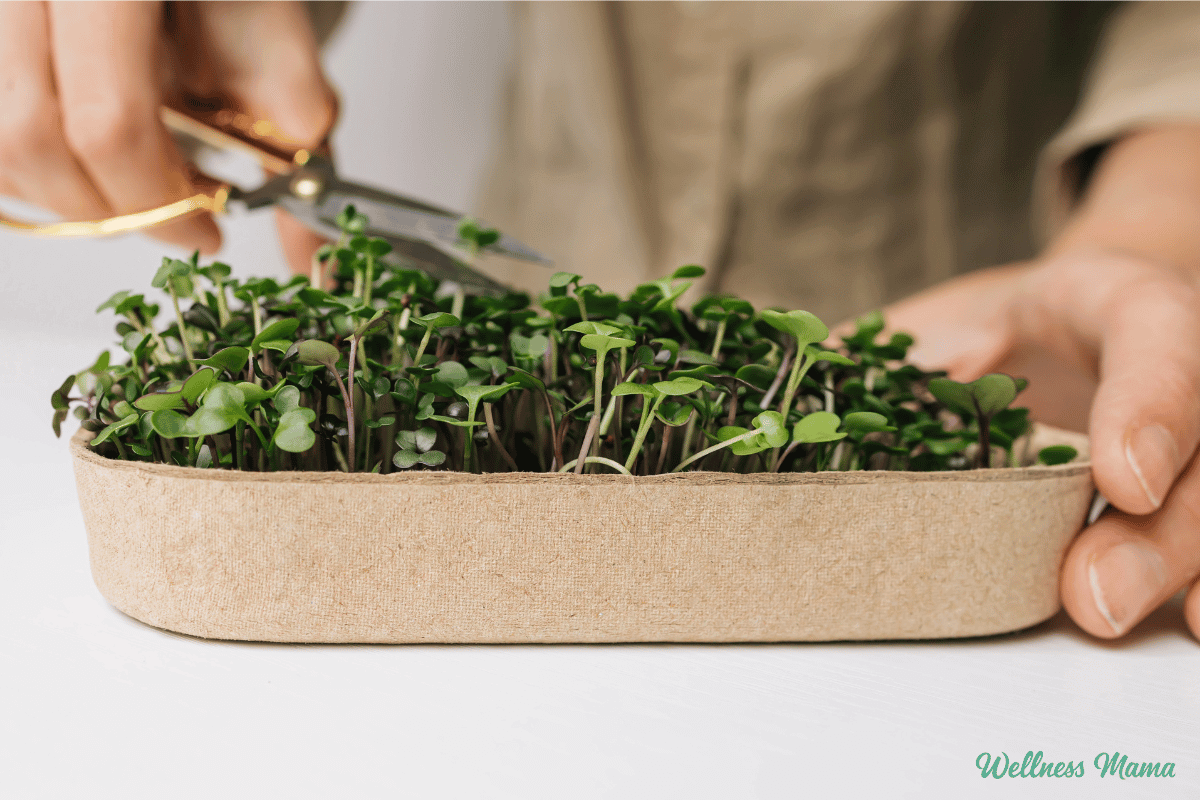
- Reduce microgreens proper above soil degree with kitchen shears. Retailer within the fridge and rinse proper earlier than use.
TIP: Soaking the seeds in a single day will velocity sprouting time, however make it harder to scatter them.
You’ll unfold extra seeds than you’d if simply planting the seeds to develop to full dimension. Since they’ll solely get 1-2 inches tall and also you wish to harvest as many as attainable from every tray.
Troubleshooting Widespread Microgreen Rising Issues
My seeds received’t sprout – They will not be getting sufficient gentle or it will not be the best temperature. Microgreens are versatile, however the excellent soil temperature for seed germination is 60-75 levels. The air across the soil ought to ideally be between 60-70 levels. Microgreens take 7-21 days earlier than they’re prepared to reap. Or your seeds could also be too outdated to germinate.
Why are my sprouts fuzzy? – The seed roots are sometimes naturally fuzzy, this doesn’t essentially imply it’s mildew. If it’s slimy, doesn’t wash off, and is rising on the greens, then it’s mildew.
There’s mildew rising on the soil – In case you do have a mildew drawback, this may be on account of an excessive amount of water or a drainage challenge. Your microgreen trays additionally want good airflow to discourage fungal progress. Mixing some coco coir into the potting soil helps enhance drainage too.
Do I would like plant rising lights? – You don’t want them, however they are often useful, particularly on darker winter days. In case you don’t have a plant gentle, choose a really sunny windowsill.
My microgreens are tall and falling over – In case you’re utilizing a lightweight supply that’s too far above the microgreens or poor high quality, it may well trigger them to get “leggy.” The stalks must stretch too excessive to succeed in the plant rising gentle.
Do Microgreens Regrow After Chopping?
Sure seeds may provide you with slightly little bit of a crop after harvesting, however not a lot. It’s greatest to compost the soil medium after you harvest and begin contemporary. Consultants typically advocate not reusing the identical soil for microgreens due to illness threat and decrease yields. If in case you have a compost pile going within the yard although, then you’ll be able to incorporate a few of your completed compost into your microgreen soil combine.
Tips on how to Eat Microgreens
You don’t want any particular microgreens recipes to make use of them. They work effectively on prime of any form of salad and most dishes. Attempt them on prime of some grain-free eggs benedict, a burger bowl, or garnish for some soup. Microgreens can work on prime of just about any savory dish!
Have you ever ever grown your personal herbs or vegetation inside? What are your favourite methods to make use of microgreens? Go away a remark and tell us!
