

A love-it-or-leave-it characteristic of Nancy Lemann’s distinctive, dreamy fashion is that she typically repeats herself. Photographs, occasions, and turns of phrase reoccur each inside and throughout her 5 novels and even, to a lesser extent, in her nonfiction. The folks in her books are all the time “falling aside”; their hearts are sometimes “in one million items on the ground.” Her narrators—normally ladies from New Orleans—have a reverence for older traditions, together with baseball, which represents “an opportunity to go forth with the heroes,” and for males in seersucker fits who’ve outdated affectations, like studying historic Greek and consuming oysters at lunch. A number of of those ladies have smooth spots for a similar “blue-eyed boy with the crooked smile” (who has a ingesting downside), they usually are likely to bask in what may very well be referred to as adverse self-talk (they chide themselves for being “idiotic” or “lamebrained”).
Within the introduction to a brand new reissue of Lemann’s 1985 cult-classic debut novel, Lives of the Saints, the British author Geoff Dyer makes observe of the “hypnotic repetition” that offers the ebook its rhythm and, crucially, its sense of place; he factors to its frequent depiction of rain that slashes and nights that swelter. The repetition can also be what, over time, has given Lemann’s work its poignancy, so it’s becoming that New York Evaluate Books, which printed the reissue, has concurrently launched Lemann’s first new novel in 24 years. The Oyster Diaries returns readers to New Orleans and revisits a number of the tales from Saints, and it’s partly in regards to the humiliating expertise of not seeing what’s proper in entrance of us, or not understanding it, and having to look repeatedly. It has an air of operating the tape again as soon as extra—this time, with the attitude gained by the passage of time and speak to with a brand new era.
The center-aged narrator, Delery Anhalt, who bears many slant resemblances to Lemann, bounces between Washington, D.C., and New Orleans, and guarantees on the outset to recount “a bonanza of heartache that in the end calibrated my soul with perception my soul had been ready for its complete life.” This can be a far more direct assertion of function than Lemann’s earlier narrators have given. The brand new novel additionally has a extra concrete plot, although calling it plot pushed can be going too far. And it exists extra firmly not solely as a replacement however in its time, which is roughly proper now.

After I spoke with Lemann in March, she had simply returned from Argentina; she apologized for having “Argentine COVID,” which she nervous was clouding her ideas. Discovering herself again in print, she appeared each grateful and a bit disoriented, and he or she referred to the years that handed between the publication of her 2002 novel, Malaise, and these NYRB books—plus one other writer’s reissue of her 1987 nonfiction ebook, The Ritz of the Bayou—as “the Doom.” She regarded the method that introduced the Doom to an finish as considerably magical. In truth, it was largely the doing of a publicist, Kaitlin Phillips, who began recreationally championing Lemann’s work a number of years in the past. Phillips related Lemann with an editor at The Paris Evaluate and one at Harper’s, each of whom printed new work of hers (which helped her get a brand new agent).
Lemann was born in New Orleans, and lived there till she attended school at Brown. “Earlier than I left New Orleans, I simply thought, Okay, that is what it’s like. That is what life is like,” she mentioned. “However the minute I left and went up north I simply realized, Oh my God, I’ve this ace in my again pocket.” Town was so singular and unusual, its fashion so nicely preserved by its “isolation and remoteness,” that she might write about it endlessly. Lemann was 28 when she printed Lives of the Saints, the story of an eccentric New Orleans household and a younger lady experiencing her “wastrel youth.” Now she is 70. Considered one of The Oyster Diaries’ two epigraphs is from the Greek poet C. P. Cavafy: “You gained’t discover a new nation, gained’t discover one other shore. This metropolis will all the time pursue you.”
Even when Lemann will not be writing about New Orleans, she’s writing about how wherever she is resembles or doesn’t resemble New Orleans. New York’s “suave crumbling gleam” reminds her of New Orleans; Washington, D.C., the place “everybody acts like federal tax bureaucrats, simply by osmosis,” doesn’t appear to remind her of New Orleans. In Malaise, the one Lemann novel narrated by somebody not from New Orleans, the lead character—who’s from Alabama—nonetheless compares Los Angeles’s Sundown Boulevard to New Orleans’s French Quarter, discovering them each “darkly beguiling.” “Folks say I believe all the pieces jogs my memory of New Orleans, and it’s true,” Lemann informed me.
Mario Ruiz / Getty
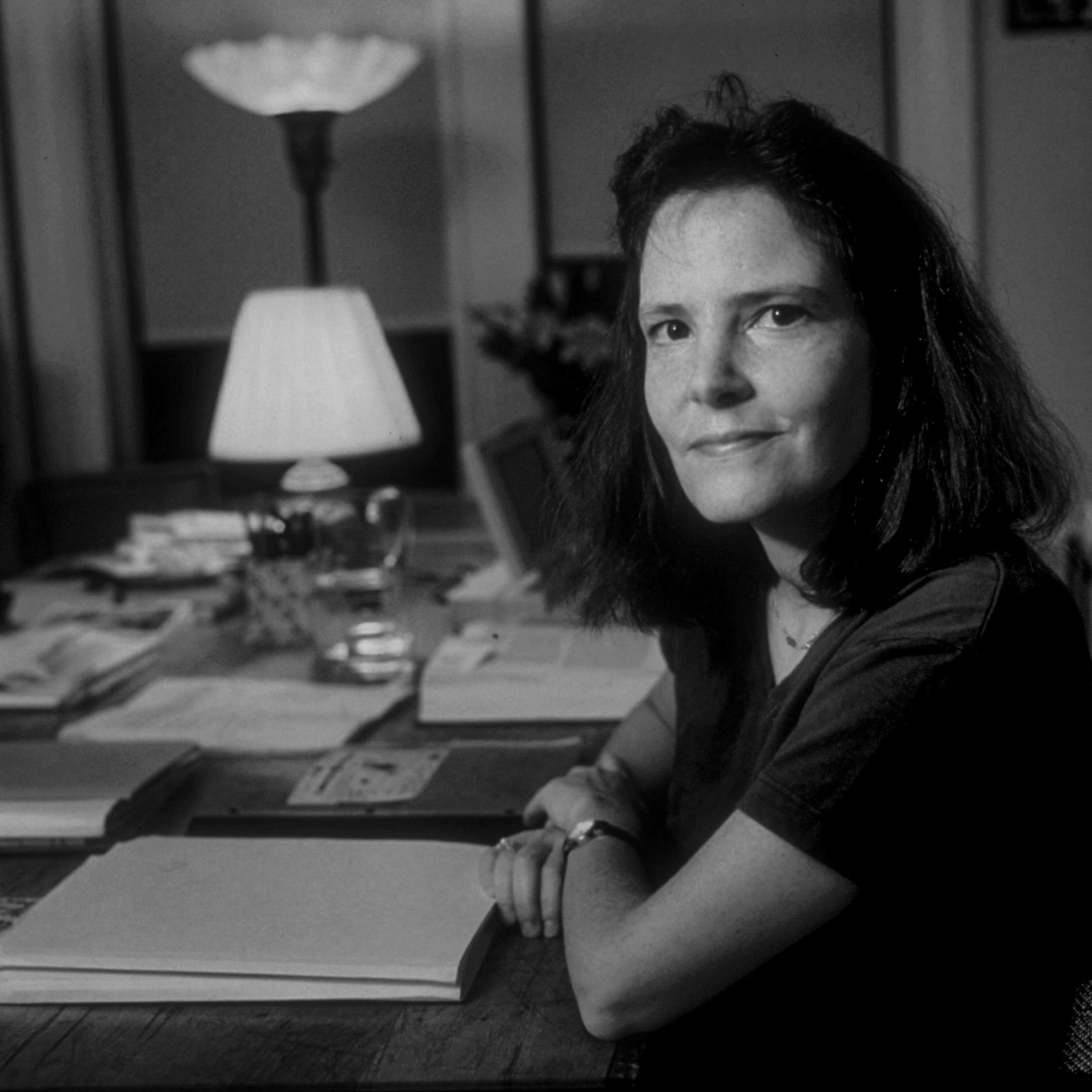
Writer Nancy Lemann returns to fiction—and her native metropolis—with a brand new novel, The Oyster Diaries.
Throughout her work, the town has been embodied by a recurring character named Claude Collier, who was the love curiosity in Lives of the Saints. A contemporary reader is perhaps tempted to roll their eyes at him; ungenerously, he’s a failson. An alcoholic, he ultimately drives his father’s regulation agency into the bottom. He would fly by a casting name for the Bravo present Southern Appeal. However Louise, Saints’ narrator, finds him angelic regardless of his vices, and regularly factors out that he’s variety, clever, well mannered, tender, and wonderful. (“He had the sweetness of the city itself and broke my coronary heart fully into one million items on the ground,” she says.) Revisiting the novel now, Lemann discovered it a bit ridiculous that Louise was “always rhapsodizing” about this man. “I can’t even get by that ebook when I attempt to reread it,” she mentioned.
And but she is clearly nonetheless keen on the rogue. She has continued to convey him again in her novels, even after saying in a 1988 interview that she wouldn’t. Claude was an out-of-frame instigator of the drama in her 1992 novel, Sportsman’s Paradise, and we study the tip of his story in The Oyster Diaries, after he reappears within the final third of the ebook (on a bike). This time, he’s completely different, or he’s proven to us in another way. Claude continues to be variety, clever, well mannered, tender, and wonderful, however he’s now a middle-aged man whose life has caught as much as him. “The brand new narrator admires him the way in which Louise did, however she’s not all sappy about it on a regular basis,” Lemann mentioned. “And she or he doesn’t have the celebrities in her eyes, you already know?”
Although The Oyster Diaries finds house to shut the loop on Claude Collier, it spends extra time with August Anhalt, the narrator’s father and the keeper of the namesake oyster diaries. These are notations in regards to the oysters he eats most days—“terrible,” “nonetheless terrible,” “horrible,” “no good,” “fantastic,” “distinctive,” or “stunning to take a look at however no salt.” The plot takes off when the nice tragedy of August’s life—a spousal betrayal—reoccurs by befalling his daughter. In contrast to Lemann’s best-known heroine, Delery doesn’t discover everybody superb; she finds most individuals annoying and moronic as an alternative. However not her father: He’s “rickety however suave—like New Orleans.”
Lemann is aware of that her debut novel, a romantic portrait of the deep South within the late ’70s and early ’80s, might now learn as old school in sure methods. Lives of the Saints barely remarks, as an example, on the Black home workers who attend to the central characters. Lemann remembered a New York “beau” telling her to take these figures out, however she couldn’t do it with out making the story unrealistic. But in The Oyster Diaries, Lemann widens actuality’s lens a bit. She straight describes the residential segregation of her beloved metropolis. Her narrator, in the midst of volunteer work as a courtroom observer, data racial disparities she notices within the authorized course of; she additionally owns as much as her personal lifelong reluctance to take a look at such issues straight, referring a few instances to “the bare bulb” being too harsh.
The Oyster Diaries isn’t a midlife-crisis novel, Lemann informed me. It’s in regards to the variations between youth and age—about dying, on the one hand, and disillusionment, on the opposite. It’s about, as she put it, “having the veil hire from the temple, having the celebrities dashed out of your eyes.” These revelations are coming fairly late in Delery’s life, Lemann admitted. “What world was she residing in? Some childlike world.” Now her father is dying, her husband deceives her, and he or she lives in D.C. throughout an intense political period. Time to get up.
Lemann has written about President Trump (“the world’s most obnoxious particular person”) earlier than, and on this ebook he’s one thing like an ominous basic presence—a “Rasputin-like menace,” as she put it to me. Earlier than Trump, she thought that politics had been largely boring, and that they had been presupposed to be. Now she works the voices of her grownup daughters into her writing, typically demonstrating the space between the generations—a era that would name politics “boring” with out being reprimanded about privilege, versus one that may’t.
I discovered these moments of intergenerational friction to be a number of the funniest of the brand new ebook. Lemann respects her daughters (certainly one of whom, Emmeline Clein, can also be a author), however she additionally teases them. She sketches some nice scenes through which the youthful era’s honest sense of ethical duty and apparent correctness on the info clashes with the older era’s often-overlooked sturdy fits. The latter embody a creatively productive ambivalence, an ingrained reluctance to make different folks really feel silly, and the power to simply discuss one thing else at dinner. “They attempt to train me and I study and I settle for their teachings,” she mentioned of her daughters. “However I additionally prefer to satirize their teachings typically.”
She satirizes herself, too. A late stretch of The Oyster Diaries is about on a household journey to a number of nations in Africa, and begins with Delery noting, “I all the time knew Africa would remind me of New Orleans.” New Orleans once more?, you must ask. However that appears to be the joke. “My daughters would say I ought to discover, research, and unlearn sure facets of those sentiments,” the narrator provides fondly. Perhaps she’s going to; perhaps she gained’t. Perhaps Lemann will write one other odd, fantastic novel, and we’ll discover out.
Whenever you purchase a ebook utilizing a hyperlink on this web page, we obtain a fee. Thanks for supporting The Atlantic.
